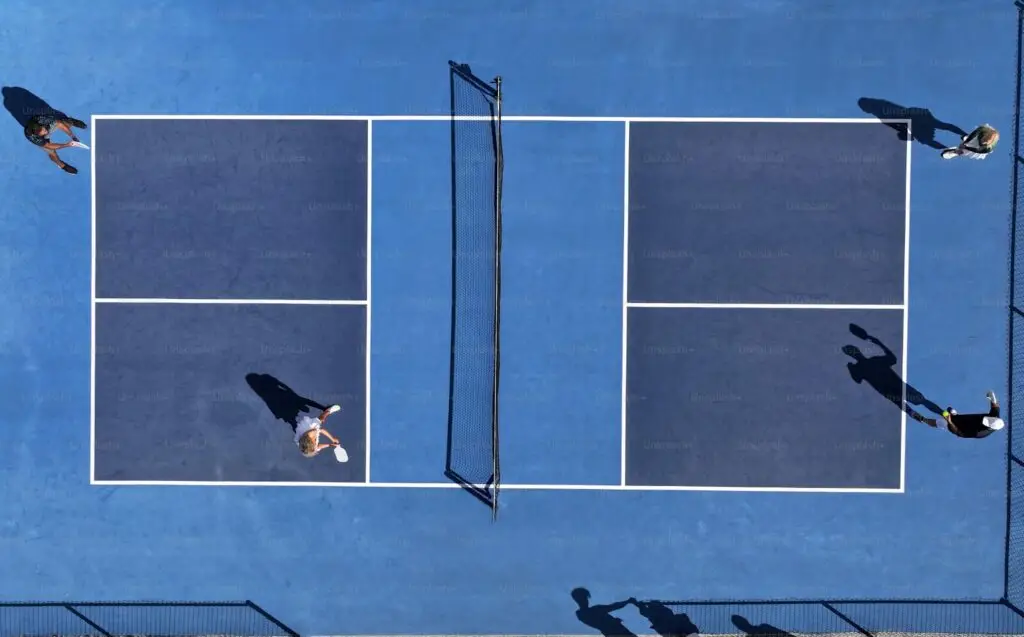
The third shot drop and the third shot drive serve entirely different tactical purposes. Your choice shouldn’t be random, it depends entirely on how your opponent hits the return of serve and your own positioning on the court.
Here is how to make the right call in real-time.
When to Use the Third Shot Drive
The drive is an aggressive, flat shot hit hard to create immediate pressure. You aren’t trying to move to the Kitchen immediately behind a drive; you are trying to force a weak, popped-up return (the fourth shot) that you can attack on your fifth shot.
Use the Drive When:
-
The return is short: If your opponent’s return lands shallow in the transition zone, you are already moving forward and have a great angle to attack.
-
The return bounces high: A high-bouncing ball gives you a better contact point to hit a flat, aggressive drive.
-
Your opponents are out of position: If one opponent is late getting to the Kitchen line or they are staggered, a hard drive can exploit that gap.
-
You need a simpler shot under pressure: If you are off-balance or struggling with the finesse of the drop, a hard drive gives you a larger margin for error and forces your opponent to react quickly.
When to Use the Third Shot Drop
The drop is a soft, arcing shot designed to land in the Kitchen. Its sole purpose is to buy you time. It forces your opponents to let the ball bounce and hit upward, neutralizing their net advantage.
Use the Drop When:
-
The return is deep: If the return lands near the baseline, a drive has a long way to travel and is easy to volley. A drop is necessary to buy time to move up.
-
The return is low: If the ball stays low to the ground, you have to hit upward. Driving a low ball usually results in hitting the net or popping it up for an easy smash. You must hit a drop here.
-
Your opponents are established at the net: If both opponents are standing at the Kitchen line with their paddles ready, driving into them is very risky—they will likely block the pace right back at your feet. A drop neutralises them.