The biggest mistake beginners make is treating a dink like a regular groundstroke. A dink is a push, not a swing.
-
The Pendulum Swing: Your paddle and arm should move as one unit from the shoulder. Do not snap your wrist or bend your elbow during the stroke. Think of your arm like a pendulum swinging low-to-high.
-
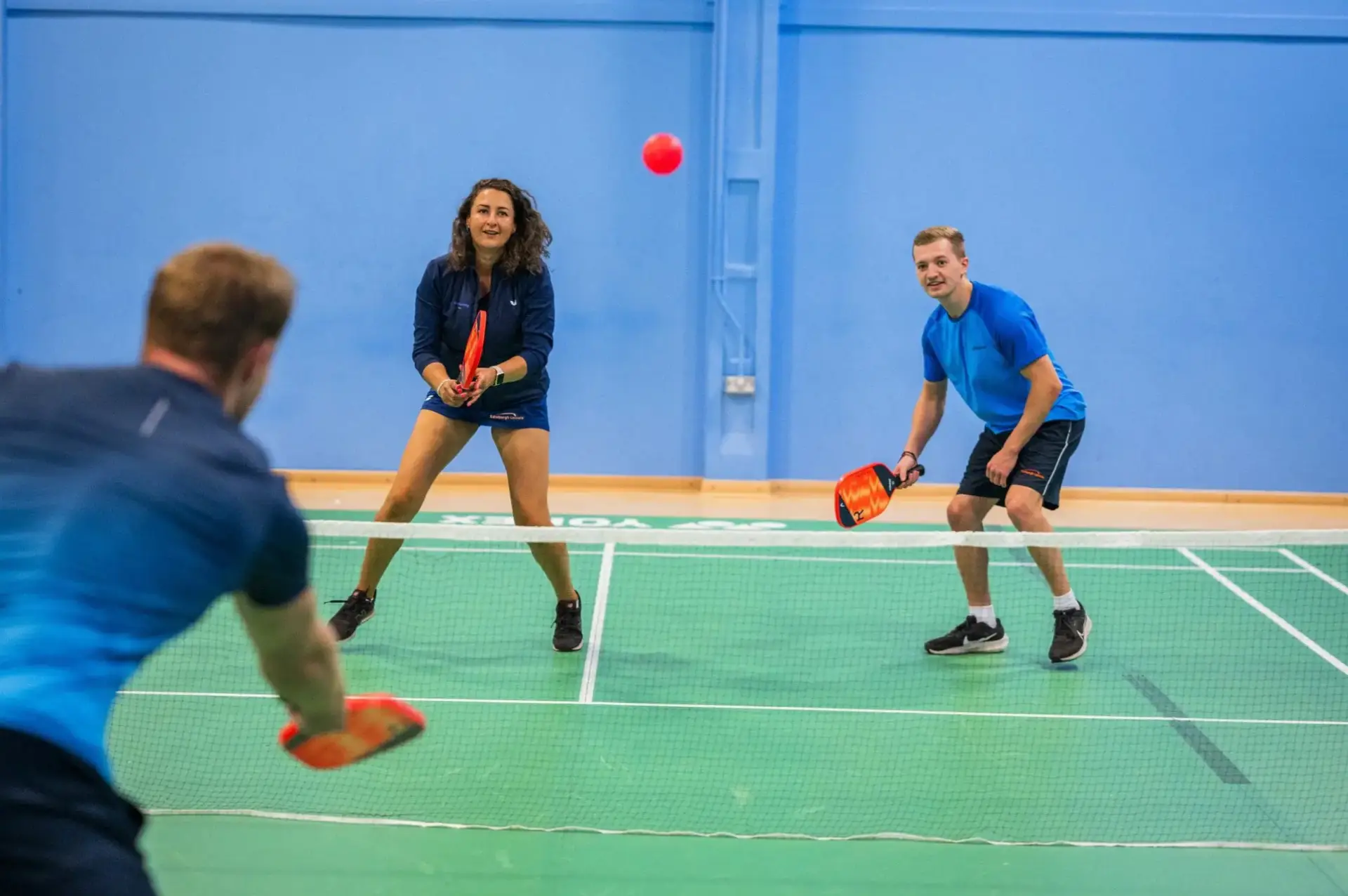
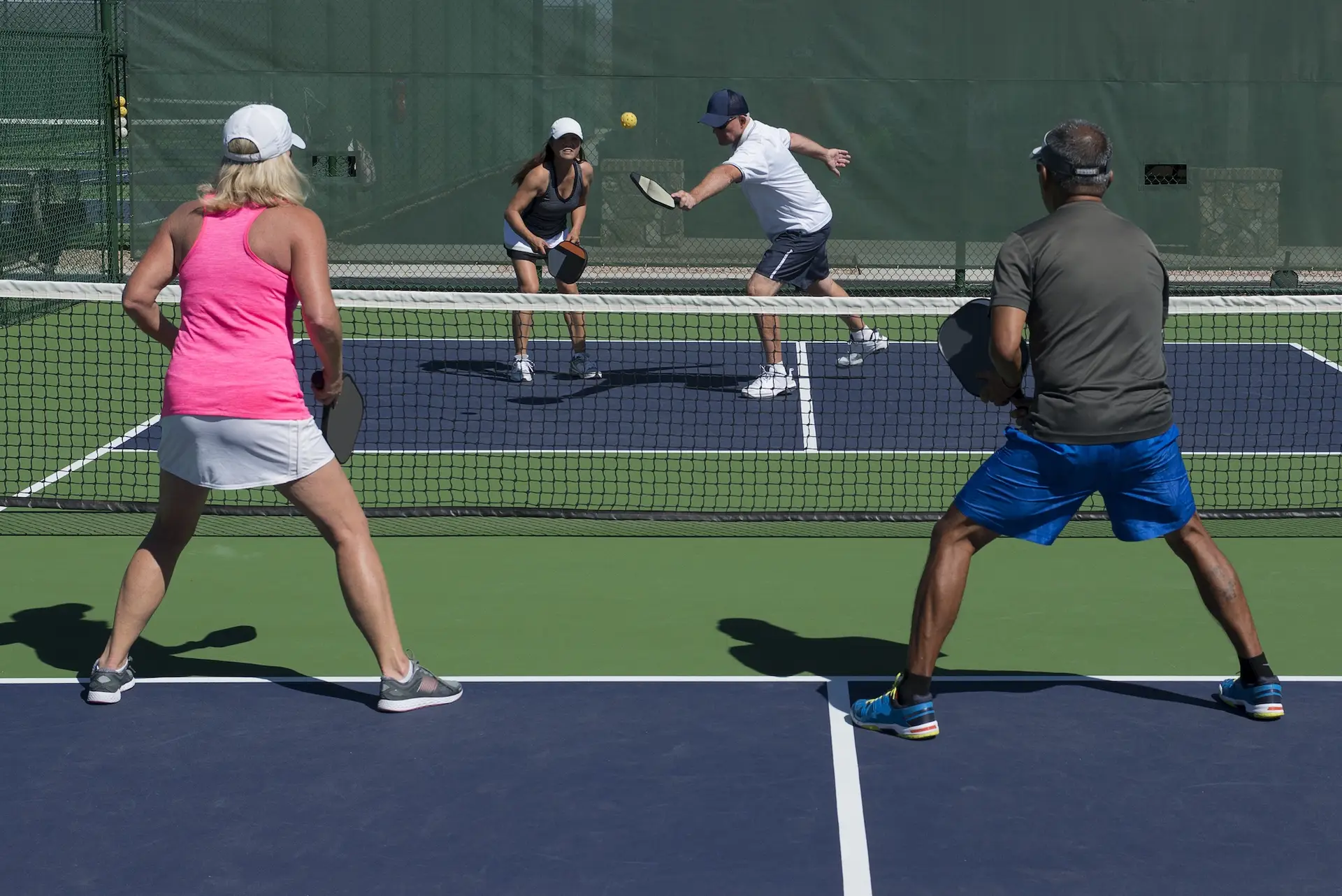
The Stance: Get low. Keep a wide base with your knees bent and your weight on the balls of your feet. If you just bend at the waist, your head drops, your balance shifts, and you will pop the ball up.
-
Paddle Angle (The “Open Face”): Your paddle face should be slightly open (tilted toward the sky) to create a gentle arc.
-
The Apex: The most critical part of a dink is the trajectory. The ball should reach its highest point (the apex) on your side of the net, so that it is already traveling downward as it crosses over the net into your opponent’s Kitchen.
-
Hold the Finish: After you make contact, freeze your paddle for a split second at the end of your follow-through. This keeps your stroke smooth and prevents jerky, erratic movements.
2 Drills to Master the Dink
To get better at dinking, you have to hit thousands of them. Here are the two best ways to practice:
Drill 1: The “Kitchen Only” Mini-Game
This is the most common warmup drill in pickleball, and it is entirely focused on soft touches and patience.
-
Both you and your partner stand at the Kitchen line.
-
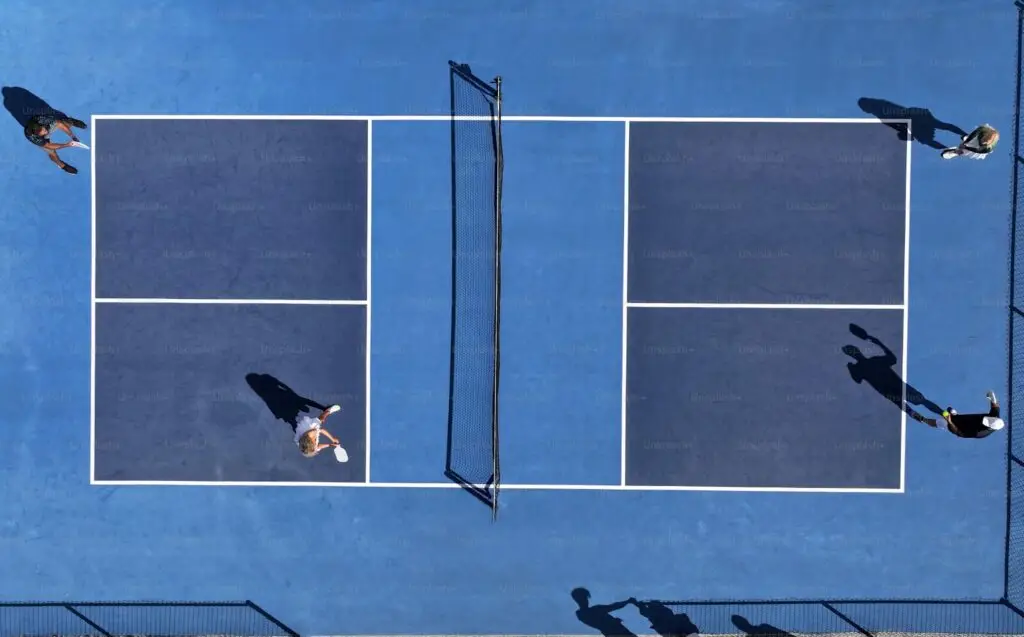
Use only the Kitchen area (the Non-Volley Zone) as the entire court. If a ball lands past the Kitchen line, it is out.
-
Play a competitive game to 11 points (rally scoring, meaning every fault is a point).
-
Focus: Keep the ball low, stay patient, and try to force your partner into making an error or popping the ball up.
Drill 2: Cross-Court Target Practice
Hitting a dink straight ahead (down the line) is dangerous because the net is higher at the sidelines, and the distance is shorter. Cross-court dinks travel over the lowest part of the net and give you more room for error.
-
Place three targets (like cones or empty ball tubes) in your partner’s Kitchen: one near the sideline, one in the middle, and one near the centerline.
-
Stand diagonally across from your partner.
-
Have your partner feed you balls, and practice hitting 10 cross-court forehand dinks aimed specifically at one of the targets.
-
Switch to the other side and practice 10 cross-court backhand dinks.
-
Focus: Do not look at your opponent; keep your eyes locked on the specific target you are trying to hit.