Why the UK is the Sport’s Newest Frontier
It started as an American phenomenon, but by 2026, the distinctive “pop-pop” of the pickleball paddle is echoing through leisure centres, tennis clubs, and community halls across the United Kingdom.
What began as a niche hobby a few years ago has officially exploded into a mainstream British obsession. Pickleball England has reported massive year-over-year membership growth, and courts are being booked up from London to Newcastle. But what exactly is driving the UK’s sudden infatuation with the sport?
The Perfect Storm of Infrastructure
The UK was uniquely positioned to adopt pickleball quickly because of its existing sports infrastructure. A standard pickleball court shares the exact same dimensions as a doubles badminton court (20×44 feet).
Because the UK has an abundance of multi-use indoor sports halls and badminton courts in local leisure centres, setting up a pickleball game requires almost zero new construction. Facilities simply roll out a portable net, throw down some temporary lines, and instantly have a venue. This plug-and-play adaptability allowed the sport to scale rapidly across the country without the need for massive funding.
2. Weathering the British Climate
One of the main reasons racquet sports like tennis struggle with year-round retention in the UK is the unpredictable weather. Pickleball thrives indoors.
The fact that the game is predominantly played in climate-controlled sports halls makes it a perfect fit for the UK. Players don’t have to worry about rain washing out their weekend matches or wind affecting the trajectory of the lightweight plastic ball. It is a guaranteed, year-round social and fitness activity.
3. The Ultimate Multi-Generational Sport
The NHS and local councils have heavily promoted activities that combat loneliness and keep aging populations active, and pickleball fits the brief perfectly.
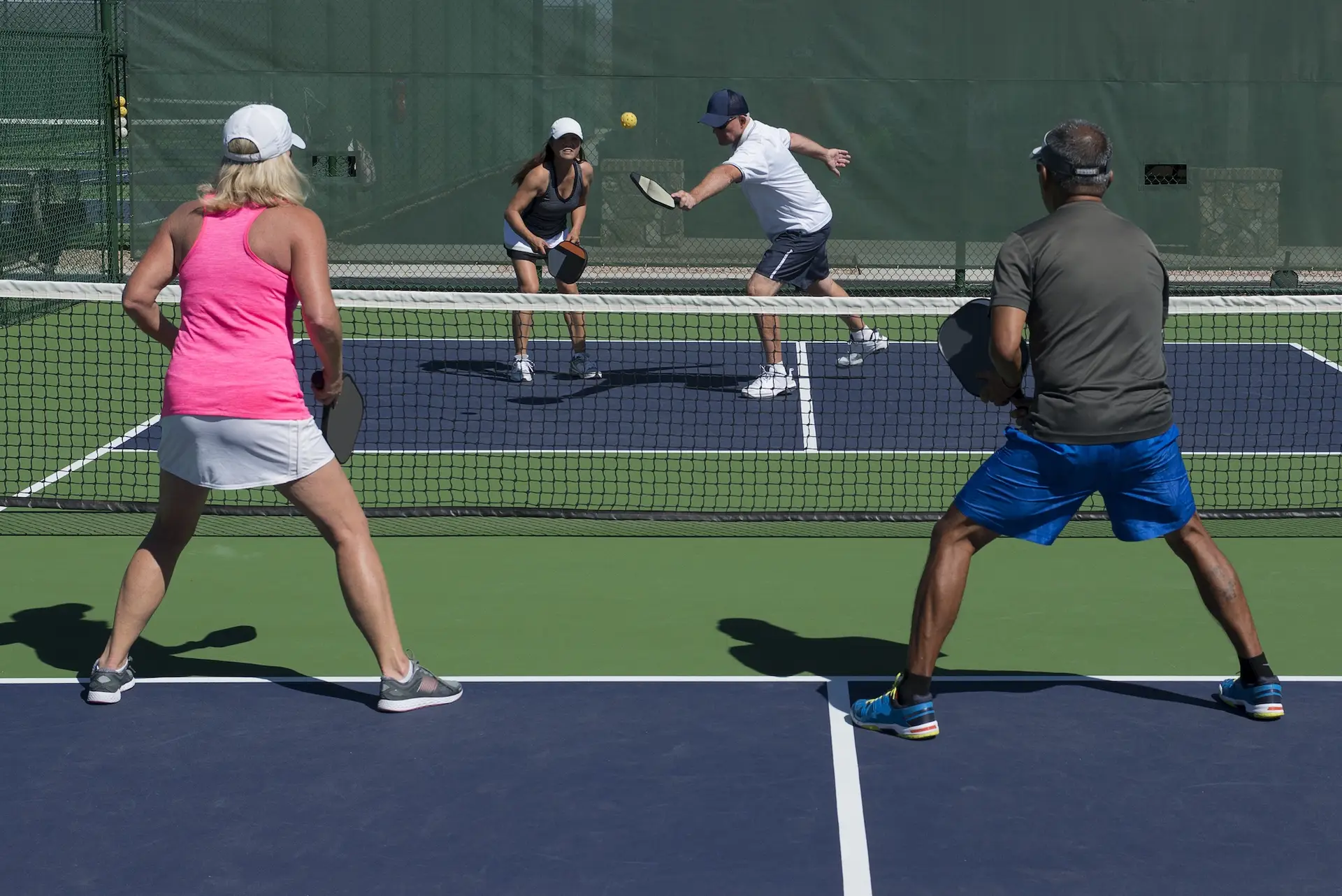
Because the game relies on positioning, soft touches (dinking), and strategy rather than brute force and sprinting, a 25-year-old and a 70-year-old can compete on a genuinely level playing field. It is not uncommon to see grandparents teaming up with their grandchildren in local UK tournaments. The smaller court size means less wear and tear on the knees and joints compared to tennis or squash, making it a highly sustainable lifelong sport.
4. The Social Vibe
British sports culture has always valued the “clubhouse” mentality, the pint or tea after the match is just as important as the match itself. Pickleball’s inherently social nature aligns perfectly with this. Because it is almost exclusively played as doubles on a very compact court, players are close enough to have conversations (and friendly banter) during the game.
Most UK clubs operate on an “open play” rotation system. You don’t need to organize a group of four in advance; you simply show up, put your paddle in the queue, and mix in with different partners all evening. It is rapidly becoming one of the best ways to meet new people in local communities.